Garden Robin

Garden Robin

Wednesday, 3 June 2015

"Say No to the Mow" Zone in the Lawn - 2nd Year


Last year I took part in Plantlife's "Say No to the Mow" campaign where you leave about a metre squared (or more) in a sunny area of the lawn unmown to see what wildflowers appear. I decided to carry on with the idea again this year as there are far more wildflowers appearing in this area than elsewhere in the lawn.

The area this year is slightly smaller than last as my husband got carried away with the lawn mower :(


Dandelions have appeared together with the following species:

I've struggled over id of the plant showed in the next 2 photos. Amanda (from The Quiet Walker) I seem to remember suggested it might be Common Ragwort (Senecio jacobaea) and the exceedingly useful website i-spot have now confirmed this id - so thanks Amanda. It would be rather nice if it attracted some Cinnabar moth caterpillars!


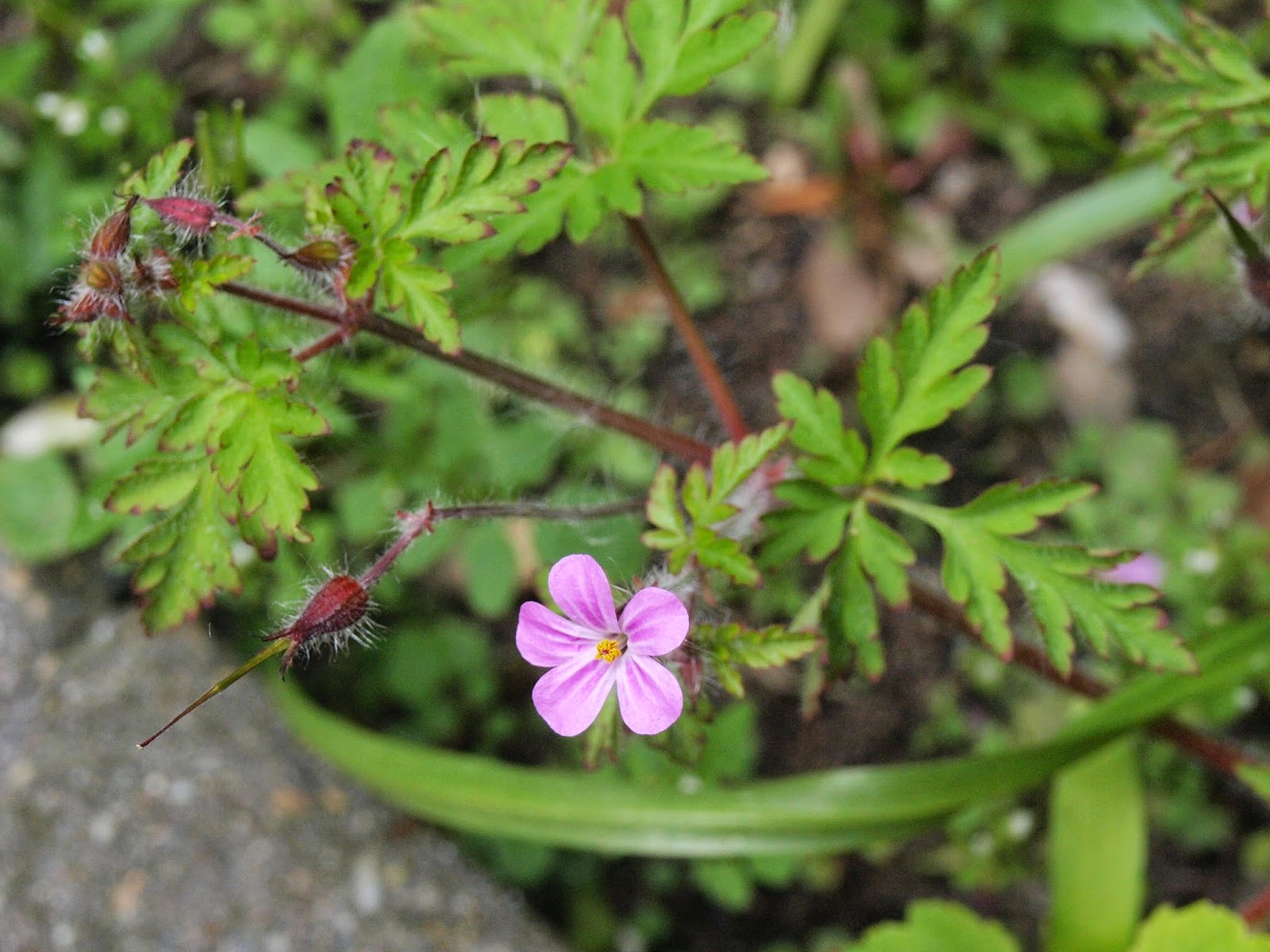
Herb Robert (Geranium robertanium)


Groundsel (Senecio vulgaris) - I've just learnt that this is also a food plant for Cinnabar moth caterpillars.


Common Cat's Ear (Hypochaeris radiocata)


Lesser Trefoil (Trifolium dubium)


Upright Yellow Sorrel (Oxalis stricta) - where the No Mow Zone meets the border.


Cut-leaved Dead Nettle (Lamium hybridum)


Sadly, there doesn't appear to be any of the more exciting species such as orchids, bugle or cowslips but its still interesting to see what appears especially if its beneficial to insects.


Compared to the rest of the lawn which just contains daisies, clover and ribwort plantain there are definitely more wildflowers in the area where the grass is left to grow until late summer.

A few interesting grasses are also appearing - I put photos of these on i-spot as I am hopeless at identifying grasses and I wanted to try and get a few more species for the Garden Bioblitz last weekend. It appears the grasses include a Meadow Grass sp, possibly a Fescue sp. and Perennial Rye Grass (Lolium perenne).


Blue Tit Update

All eggs have now hatched and there are six young birds :)

Tuesday, 2 June 2015

Blue Tit Hatchlings


We were able to watch, via the nestbox camera, four hatchling Blue Tits emerge from the eggs this morning :)
Not the best of photos but it will give you an idea!


The female Blue Tit consumed the egg shells and the male has been bringing in food on a regular basis for the female to feed the young.

Hopefully, the last two eggs will hatch within a day or so.

Thursday, 28 May 2015

Peppered Moth


A Peppered Moth (Biston betularia)was in the moth trap yesterday morning - another new species for the year.


This species provides a good example of evolution by natural selection in action.

Peppered Moths are usually white with black speckles covering the wings. These markings make them well camouflaged against lichen covered trees and walls where they rest during the day. A genetic mutation in some moths results in them being melanic (i.e. they have black wings). The black form is not well camouflaged against a lichen covered tree, wall or fence and are, therefore, far more likely to be eaten by predators, such as birds. Under normal environmental conditions fewer of the black type survive to breed and they are, thus, far less common.

During the nineteenth century, following industrialisation, it was noticed in towns and cities that the black form of the moth was becoming more common than the peppered form. The Industrial Revolution and increasing number of coal fires led to the atmosphere becoming increasingly polluted killing off lichen and blackening the tree trunks. The melanic form of the moth was now better camouflaged from predators than the peppered form and thus more likely to survive and breed. As moths are short-lived evolution by natural selection happened quickly.

In the mid twentieth century measures were introduced to control and reduce air pollution and the air in cities and towns became cleaner. Lichens re-colonised tree trunks and walls and the melanic form was now at a disadvantage and more likely to be killed and eaten. The situation now reversed and once again the better camouflaged peppered form of the moth became more abundant in cities.

Unfortunately, the species is now declining and the numbers of Peppered Moths had declined by two thirds between 1968 and 2002 - the reasons for the decline are unknown.

Tuesday, 26 May 2015

A Few Moths


May continues to be a disappointing month for moths. I did see a Mint Month (Pyrausta aurata) in the garden flying around Red Valerian about a foot away from a mint plant earlier this month. Trapping sessions on Friday 15th and Saturday 16th May produced no moths at all.

This weekend I trapped just a handful of moths.


Friday 22nd May (Min temp 9.0 degrees centigrade)


Bee Moth (Aphomia sociella) x 1 (New for Year)

Shuttle Shaped Dart x 1

Tachystola acroxantha x 2 (New for Year)


Shuttle Shaped Dart - a common and widespread moth. The larvae feed on herbaceous plants such as Dandelion and Dock.


Bee Moth - another common species often found round bee and wasp nests and beehives. The larvae feed on debris and contents of wasp and bee nests.


Tachystola acroxanthat This tiny moth has undergone a rapid range expansion following its accidental introduction on garden plants from Australia. The larvae feed on fallen leaves and leaf litter.


On Sunday, 24th May, I spotted a White-shouldered House Moth in the garage (new for year)


Monday, 25th May (Min temperature 10.3 degrees centigrade)

Heart and Dart (Agrotis exclamationis) x 2 (New for Year)


Another common and widespread moth in Britain. Found in all sorts of habitats. Larvae feed on herbaceous plants such as Ribwort Plantain and Fat Hen.


The total number of species for 2015 now stands at 23.


Recently fledged House Sparrows


and Great Tits are being fed around the garden by their parents.

Friday, 22 May 2015

Aquilegia


Columbines (or Granny's Bonnets) have never grown well in our back garden but we discovered by accident that they do thrive in the front garden where we grow them in a border interspersed with Cornflowers and Cosmos.


Aquilegia is from the Latin for eagle because the flower base resembles an eagle's claws. The name Columbine comes from the Latin word "columba" which means dove. In the Language of Flowers the red flower symbolises Anxiety and the purple Resolution.

Its also another flower that is very popular with bees.

Tuesday, 19 May 2015

Bits and Pieces - mainly Flowers

A few flower photos from around the garden -

Clematis


Thyme is flowering in the wall - bees love this plant. In fact, I've planted several other thyme and marjoram plants in the same wall for this reason.


Red Valerian - much loved by Hummingbird Hawkmoths. Although I've only seen this species in Dorset and Jersey I live in hope one might one day visit the garden.


Fringe Cups (Tellima grandiflora). I first saw this pretty little plant in a wood when I was doing a Plantlife Survey and I hadn't a clue what it was. The person who identified it for me very kindly took a cutting from one of his own plants for me.


We have several red and orange Azaleas - to be honest they are a bit too gaudy for me but the colours are stunning.


Welsh Poppy


I love the colour combination of this primula.


Choisea - mum and dad bought us this shrub and its rather special to me as Dad passed away 18 years ago and mum is currently in a Nursing Home with advanced Alzheimer's. The plant is a reminder of happier times with them.


I am rather chuffed that my Christmas Tree is putting out new growth. I first bought it as one of those miniature Christmas trees about 8 inches high - its now about four feet. I didn't bring it in the porch last Christmas as we usually do because it really didn't look well. But re-potting seems to have worked wonders.


B found this self-seeded Oak in the garden and is nurturing it in a pot. I am not sure if he intends to plant it out one day or whether he is planning on turning it into a bonsai tree!


Ever since I discovered Cosmos a few years ago (bees and hoverflies just adore the flowers) we've grown it from seed and plant it in several borders around the front and back garden.


I am also pleased that the two Echinops plants I bought last year from the Botanical Gardens are really thriving. I am hoping for a lot more flowers this year. Another plant loved by pollinators.


B has weeded and cleared one of the raised beds which has been rather neglected over the years and behind it is the garden where D used to grow flowers when he was little - also now cleared. Am not quite sure yet what we are going to plant but


I did pick up these plants from Morrisons (have to say Morrisons is a good place to pick up cheap shrubs, climbers and perennials - I know they are much smaller than you would get from a Nursery but these days Nurseries seem to want about £7 for just one perennial!|).


The rest of the border will be planted with wildflower seeds (received a free packet recently from Kew Gardens) and today I bought these. As there is a connection with the Bumble Bee Conservation Trust I would think these seeds are free of any neonicotinoid coating!!!


Whilst in Morrisons I picked up another Bee hotel - again these are good value and the one I have already which is identical is used by leaf cutter bees.


I couldn't resist this little ornament - I thought of Amanda when I saw this!! :)


Edit

Forgot to mention that the female Blue Tit started incubating yesterday when there were four eggs and this morning she has laid another one. The male is bringing her food in the nest :)

Sunday, 17 May 2015

Wildflowers and Update


The wildflower mini meadow is starting to spring into life


Red Campion (Silene dioica)


Salad Burnet (Sanguisorba minor)


Common Sorrel (Runex acetosa)


Ribwort Plantain (Planatago lanceolata)


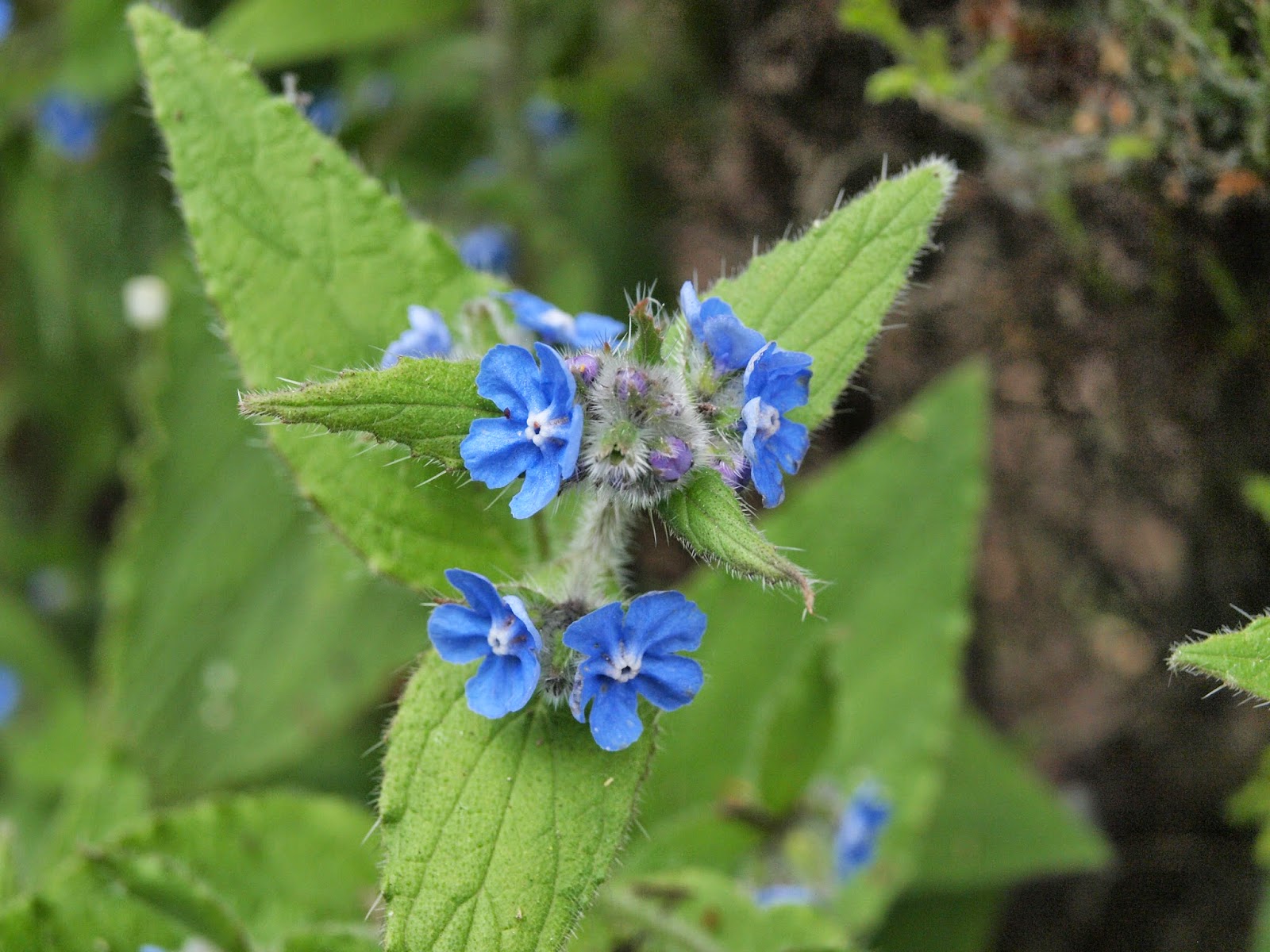
Green Alkanet (Pentaglottis sempervirens) has self-seeded in one of the borders. Not sure where it came from and I gather its rather invasive but not too bothered as the bees love it :)


Herb Robert (Geranium robertianum) is scattered all over the garden.


Garden Update

Blue Tit nest - the female has laid at least one egg. Its very difficult to see exactly how many as she covers them with feathers. She won't start incubating until the clutch is more or less complete and then we should get an idea exactly how many eggs there are.


Butterflies

Not too many around at the moment as its gone so cool but last Monday we had Brimstone, Orange Tip, Holly Blue and Peacock.

Frog tadpoles - all seem to have disappeared. There are loads of Common Newts in the pond who could well be eating them.
Had to rescue an adult Common Frog from a Magpie on Thursday evening. The Magpie was about to peck it to death. Luckily, we intervened and the frog seemed uninjured and we placed it under some shrubs in the border.


Bees

Rescued a Tawny Mining Bee (Andrena fulva) from the kitchen today. This species makes nests that resemble mini volcanoes out of soil in lawns.


Garden Moths

It has been a really disappointing month so far for moths. All I've trapped since 27th April are Hebrew Character x 1, Shuttle Shaped Dart x 4. A Brimstone Moth was seen fluttering at the garage window one night. Have had several occasions when I have trapped no moths at all. Friday, 15th May I found just one Black Sexton Beetle in the trap and last night this Nursery Web Spider (Pisaura mirabilis.


During mating the male Nursery Web Spider gives the female a wrapped insect! Presumably as a peace offering and to make sure he himself is not consumed? The female carries her eggs with her in a ball the size of a pea and just before the young hatch she puts them inside a silken tent for protection. The adult spiders catch prey by running and sprinting after small insects.